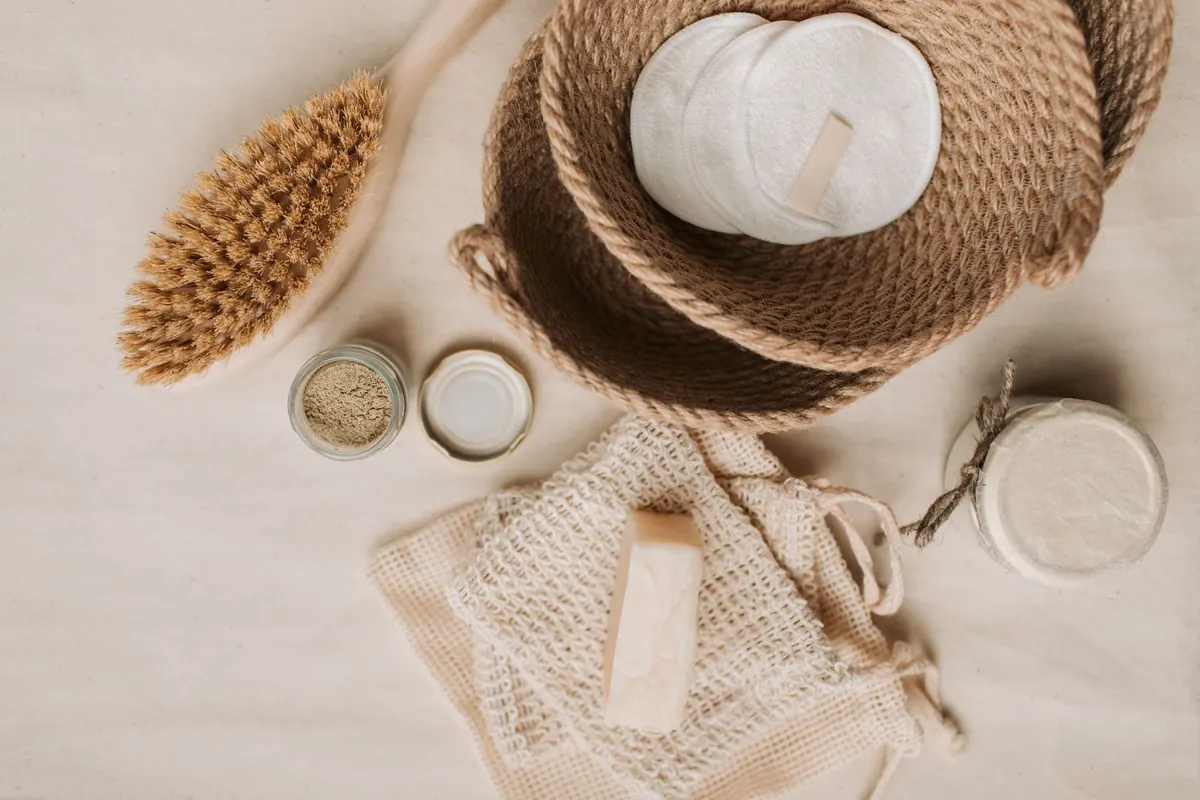
Sustainable beauty rarely starts with a haul. It starts with a shelf you already own, a mirror, and an honest question: what do I actually use? In Cumbria we have a quiet advantage here. Our towns are small enough that makers turn up at markets in person, refill shops sit a few doors down from the pharmacy, and there is a long habit of buying things that last. The goal isn't a perfect routine. It's a lighter one that still does its job.
Start With What You Already Own
Before you buy anything, take everything out. Group it: cleansers, moisturisers, treatments, shampoo, styling, makeup. Then sort into three piles, things you use weekly, things you use occasionally, and things you forgot you had.
- Finish the half-empty bottles first. Throwing away usable product to buy "greener" replacements wastes more than it saves.
- Note the packaging left behind: pumps, sachets, foil pouches, pumps inside pumps. That's your roadmap for what to swap.
- Count how many products you genuinely use daily. For most people it's five or six, not fifteen.
- Set aside anything that irritates your skin. No eco-credentials justify a rash.
That last pile matters. A product you react to is waste no matter how good the ingredients list looks.
Skincare: The Easy Wins
The biggest savings in skincare come from packaging and water content, not from exotic botanicals. Concentrated formulas, solid bars and refill pouches cut plastic dramatically, and they tend to travel well, which suits a weekend in the fells.
Swaps worth trying: a solid cleansing bar instead of a bottled gel, a concentrated serum you dilute or apply sparingly, a moisturiser in a glass jar or aluminium tin, and a larger size of the one product you use daily. Skip single-use sheet masks and face wipes. Wipes are expensive per use, hard to recycle, and unkind to plumbing.
Keep the basics boring
A gentle cleanser, a moisturiser that suits your skin type, and a sunscreen you will actually wear every day do more for your skin than a shelf of serums. If you have acne, rosacea, eczema or another diagnosed condition, ask a pharmacist, GP or dermatologist before overhauling your routine. Sustainable should not mean untreated.
Haircare Without the Plastic Habit
Hair is where the plastic adds up fastest, because you use a lot of it and rinse it down the drain. Shampoo bars are the obvious swap, and modern ones lather properly, though they take a fortnight to get used to. Solid conditioners are trickier; the good ones are richer than you expect, so start with a small amount and add more rather than overloading.
If bars aren't for you, look for refill stations, concentrated liquids, or the largest bottle you can reasonably store. A refill shop will often take your own container, which saves both the bottle and the trip.
Much of Cumbria's tap water is soft, which means shampoo rinses out more easily and you often need less product than you would in a hard-water city. It also means fewer clarifying treatments, so a simpler routine can hold up well. Wash less often if your scalp allows it, and go easy on heat styling; both save product and electricity.
Makeup and Tools: Buy Less, Use More
Makeup is hardest to make plastic-free, so be realistic. Mascara is the sticking point: the tube, wand and short shelf life mean waste is almost unavoidable. Buy one you like, use it up, and don't stockpile. Elsewhere there is more room to move.
Multi-use creams are the practical answer. A cream blush that doubles as a lip colour replaces two items. Refillable compacts for powder and eyeshadow exist and are worth the initial cost if you use them daily. Solid balms in tins cover lip, cuticle and cheek.
Tools deserve attention too. A good set of brushes, washed every couple of weeks with mild soap, will outlast a dozen cheap sets. Reusable cotton rounds, a muslin cloth or a flannel replace disposable pads entirely. For hygiene, replace mascara every few months and stop using anything that smells or looks off.
Sourcing Locally in Cumbria
Buying locally isn't automatically greener, but it shortens supply chains, keeps money in the county, and lets you ask questions face to face. Cumbrian makers work with what's around them: beeswax, lanolin from sheep farming, oats, herbs and plant oils. Soap, balm and body butter are the strengths of the local market, and most producers sell in paper or tins rather than plastic.
What to look for at a stall
Ask where the ingredients come from, whether they offer refills, and what the packaging is made of. A maker who can answer clearly is usually a maker worth buying from. Market towns across the county, from Kendal and Penrith to Ulverston and Keswick, run regular markets where you can meet producers directly, and independent health food shops and refill stores on high streets across Cumbria will often take containers and order in items they don't stock.
Reading the Label Without the Hype
Words like "natural", "clean" and "eco" are used loosely in beauty marketing. They are not a guarantee of anything. Look for specifics instead: refillable, recyclable, recycled content, plastic-free, palm oil free, cruelty free.
- Certifications are more reliable than adjectives. COSMOS, B Corp and Cruelty Free International's Leaping Bunny logo all involve checks a company has to pass.
- Refill pouches use less plastic than a new bottle, but check that your local scheme actually recycles them.
- Carbon offsets and tree-planting claims are hard to verify. Treat them as a bonus, not the reason to buy.
- Microbeads were banned in rinse-off cosmetics in the UK, so that particular worry is largely behind us, but plastic glitter still turns up in products.
A Realistic Way to Start
Change one thing at a time and give it a month. Attempting a whole new routine in a weekend usually ends with a drawer of abandoned products.
- Finish what you own before buying replacements.
- Pick one category, usually shampoo or cleanser, and find a refillable or solid alternative.
- Buy the largest size you'll realistically use of the products you use daily.
- Replace disposable pads, wipes and cotton buds with washable or reusable versions.
- Find your nearest refill shop or market stall and take a container with you.
- Keep a note of what worked and ignore what didn't. A routine that suits your skin is the only one worth keeping.
If something stings, itches or causes a breakout, stop using it and get advice rather than pushing through. And if you are treating a skin condition, or considering supplements for hair, skin or nails, speak to a pharmacist or doctor first. Everything else here is a habit, not a rule.
Photo: angelicavaihel / Pixabay